Top 7 Most Expensive Musical Instruments In The World
In the world of classical music, the value lies in things that open a portal to the past, things shrouded in mystery and stories often witnessed only by themselves. Old instruments are not just instruments; they are pieces of history, embodying the legacies of great musicians and master craftsmen. Let’s discover together the stories of seven of the world’s most treasured musical instruments.
Stradivarius MacDonald Viola
Price: 45 million dollars
Imagine holding a violin worth 45 million dollars! That’s the cost of the Stradivarius MacDonald viola, made in 1719 by the famous Antionio Stradivari. There are only 10 of these instruments left in the world, which explains why the viola named after the 3rd Baron MacDonald failed to find a new owner in 2014 when it was auctioned.
Vieuxtemps Guarneri Violin
Price: 16 million dollars
If violins could talk, the Vieuxtemps Guarneri violin would have a lot to tell! Made in 1741 by Giuseppe Guarneri del Gesù, the instrument has remained in near-perfect condition for 300 years. In 2012 it was sold for 16 million dollars, in the best possible scenario – to a buyer who, instead of keeping it in the shadows and letting its sound lost in time, decided to allow the best violinists to take it to the world’s greatest stages.
Stradivarius „Lady Blunt” Violin
15,9 million dollars
Despite being more than 300 years old, the Lady Blunt violin, named after Lady Anne Blunt, niece of Lord Byron, looks almost as good as new. It was sold in 2011 for a whopping $15.9 million, with the proceeds donated to help victims of the earthquake and tsunami in Japan that same year.
Stradivarius Hammer Violin
3,54 million dollars
Made in 1707, during Stradivari’s “golden age”, this violin was once owned by Christian Hammer, a Swedish collector. Since then, its intense and vibrant tone has delighted audiences for centuries. In 2006, when it was sold at auction for 3.54 million dollars, it set a new record. Today, it continues to be played by some of the world’s finest violinists so that its extraordinary sound can still be heard around the world.
Stradivarius Paganini Cello
6 million dollars
The Stradivarius Paganini cello, made in 1736, is a rarity. Stradivari made only about 60 cellos, this one in particular was owned by none other than Niccolò Paganini, the legendary violinist. Paganini loved the instrument’s deep, resonant sound so much that he treasured it as an object of great value. No wonder it was sold for $6 million in 2012.
Stradivarius Molitor Violin
3,6 million dollars
This violin carries with it a mystery – was it or was it not played by Napoleon himself? The Stradivarius Molitor violin was made in 1697 and was owned by Count Gabriel Jean Joseph Molitor, one of Napoleon’s generals. In 2010, it sold for $3.6 million, making it one of the most expensive in the world. Its rich tone and the good conditions in which it has been kept make it a favorite among collectors and musicians alike.
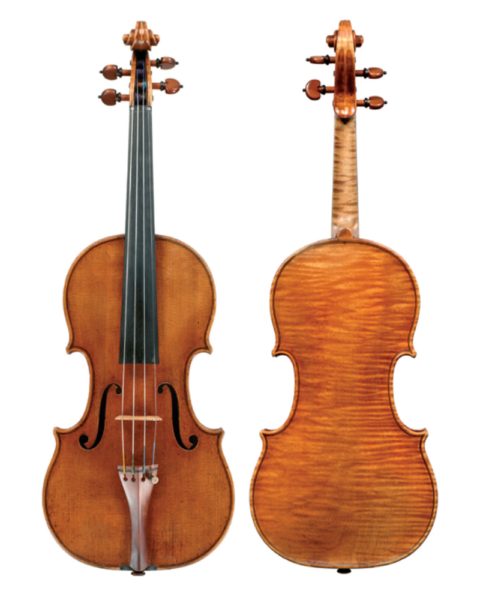
Stradivarius Molitor violin. Source: The Strad.
Stradivarius Duport Cello
20 million dollars
Made in 1711, this cello was owned by Jean-Louis Duport, a famous cellist who let Napoleon Bonaparte himself use it. After this feat, the instrument got a deep scratch from Napoleon’s ice, a mark that is still visible today. Despite this, the instrument is estimated to be worth around 20 million dollars.
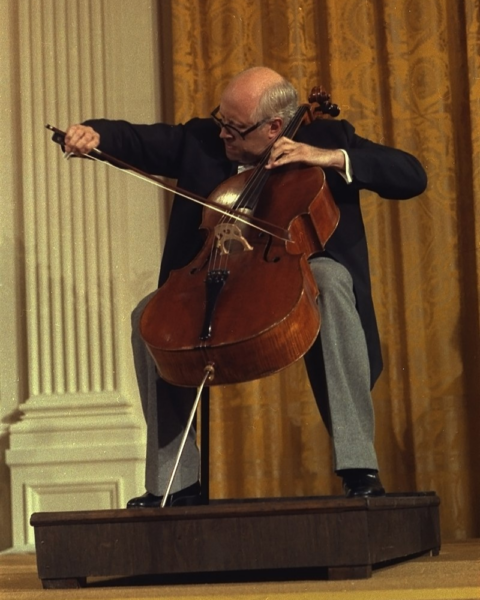
The Stradivarius Duport cello played by Mstislav Rostropovich in 1978.
These instruments are proof that music is not just about sounds, but also about heritage, emotion and connections between generations. Whether you’re a musician, music lover or story seeker, these instruments invite you to listen not just with your ears, but with your heart, to the rich history they carry. What do you think, do they justify their price?
_____
Akordaj is a platform created in the framework of the Spotlight on Music project, through the Erasmus+ program, funded by the European Union. The views and opinions expressed, however, are those of the author(s) alone and do not necessarily reflect the views and opinions of the European Union or the ANPCDEFP. Neither the European Union nor the ANPCDEFP can be held responsible for them.